Snakebite Envenoming
Snakebite envenoming is a neglected tropical disease that causes significant morbidity and mortality, particularly in rural areas of developing countries. It’s a complex medical emergency requiring prompt and appropriate management.
Understanding Snakebite Envenoming:
- Definition:
- Snakebite envenoming occurs when venom from a poisonous snake is injected into a person’s body through a bite.
- The severity of envenoming depends on various factors, including the species of snake, the amount of venom injected, the location of the bite, and the victim’s size and health.
- Snakebite envenoming occurs when venom from a poisonous snake is injected into a person’s body through a bite.
- Global Impact:
- Snakebites are a significant public health problem, especially in South Asia, Southeast Asia, sub-Saharan Africa, and Latin America.
- It disproportionately affects rural populations engaged in agricultural activities.
- It can cause long-term disabilities, including limb amputation and psychological trauma.
Types of Venom and Their Effects:
Snake venom is a complex mixture of toxins that can have diverse effects on the human body. The primary types of venom and their associated symptoms include:
- Neurotoxic Venom:
- Affects the nervous system.
- Symptoms: Muscle weakness, paralysis, difficulty breathing, drooping eyelids, and respiratory failure.
- Commonly seen in bites from elapid snakes (e.g., cobras, kraits, and mambas).
- Affects the nervous system.
- Hemotoxic Venom:
- Affects the blood and blood clotting.
- Symptoms: Bleeding, swelling, pain, tissue damage, and kidney failure.
- Commonly seen in bites from viperid snakes (e.g., vipers, rattlesnakes, and adders).
- Affects the blood and blood clotting.
- Myotoxic Venom:
- Affects muscle tissue.
- Symptoms: Muscle pain, rhabdomyolysis (muscle breakdown), and kidney failure.
- Some snakes have this type of venom in addition to other types.
- Affects muscle tissue.
- Cytotoxic Venom:
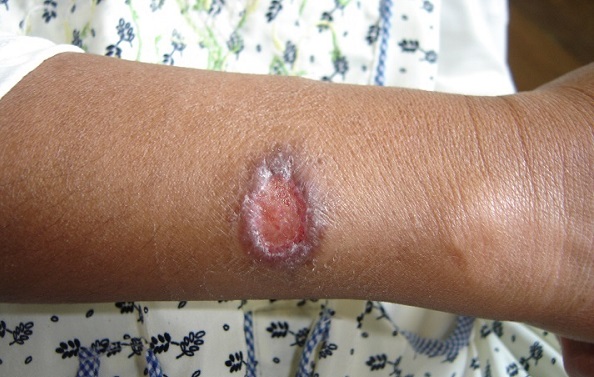
- Causes localized tissue damage.
- Symptoms: pain, swelling, and necrosis at the bite site.
- Causes localized tissue damage.
Symptoms and Signs:
The symptoms of snakebite envenoming can vary depending on the type of venom and the severity of the bite. Common symptoms include:
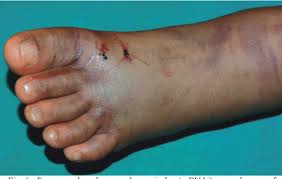
- Local symptoms: Pain, swelling, redness, and blistering at the bite site.
- Systemic symptoms:
- Bleeding (e.g., from gums, nose, or internal organs).
- Muscle weakness and paralysis.
- Difficulty breathing.
- Kidney failure.
- Cardiovascular collapse.
- Altered mental status.
- Nausea and vomiting.
- Bleeding (e.g., from gums, nose, or internal organs).
Diagnosis:
- Clinical Assessment:
- The diagnosis is primarily based on the patient’s symptoms and the circumstances of the bite.
- Identifying the snake species, if possible, is helpful but not always feasible.
- Laboratory Tests:
- Blood tests (e.g., coagulation studies, kidney function tests) may be necessary to assess the severity of envenoming.
- Venom detection kits may be used in some areas.
- Blood tests (e.g., coagulation studies, kidney function tests) may be necessary to assess the severity of envenoming.
Treatment:
- First Aid:
- Reassure the victim and keep them calm.
- Immobilize the bitten limb.
- Transport the victim to a medical facility as quickly as possible.
- Do not use tourniquets, cut the bite wound, or attempt to suck out the venom.
- Antivenom:
- Antivenom is the most effective treatment for snakebite envenoming.
- The type of antivenom used depends on the snake species involved.
- Antivenom should be administered in a medical facility under the supervision of a healthcare professional.
- Antivenom is the most effective treatment for snakebite envenoming.
- Supportive Care:
- Supportive care is essential for managing complications such as respiratory failure, kidney failure, and bleeding.
- This may include mechanical ventilation, dialysis, and blood transfusions.
- Pain management.
- Wound care.
- Rehabilitation:
- Physical therapy may be needed for long term disabilities.
- Psychological support.
- Physical therapy may be needed for long term disabilities.
Prevention:
- Education and Awareness:
- Educating communities about snakebite risks and prevention measures.
- Educating communities about snakebite risks and prevention measures.
- Protective Measures:
- Wearing protective footwear and clothing in snake-prone areas.
- Using flashlights at night.
- Clearing vegetation around homes and farms.
- Wearing protective footwear and clothing in snake-prone areas.
- Improving Access to Healthcare:
- Ensuring that antivenom is readily available in rural areas.
- Training healthcare professionals in snakebite management.
- Improving transportation systems to medical facilities.
- Ensuring that antivenom is readily available in rural areas.
Public Health Importance:
- Snakebite envenoming is a significant public health problem, especially in resource-limited settings.
- It causes substantial morbidity and mortality, leading to long-term disabilities and economic hardship.
- Increased awareness, improved access to antivenom, and effective prevention strategies are crucial for reducing the burden of this neglected tropical disease.
I hope this information is helpful.