Measles: A Comprehensive Guide to the Once and Future Threat
Introduction: The Resurgent Contagion
Measles, once a common childhood illness relegated to history books in many countries, has staged a dramatic and dangerous global comeback. Caused by one of the most contagious viruses known to humankind, measles is not a benign rite of passage but a serious, acute systemic illness that can lead to severe complications and death, particularly in young children, pregnant women, and the immunocompromised. The stark decline in measles cases following the introduction of a highly effective vaccine in 1963 stands as one of public health’s greatest triumphs. However, the recent resurgence—driven by declining vaccination rates, pandemic-related disruptions to routine immunization, and global travel—serves as a potent reminder of the virus’s relentless infectiousness and the fragility of herd immunity. This guide provides a detailed exploration of the measles virus, its unmistakable clinical course, potential complications, and the critical importance of prevention in an interconnected world.
Part 1: The Virus and Its Unmatched Contagiousness
Measles is caused by a single-stranded, enveloped RNA virus from the Paramyxoviridae family, genus Morbillivirus.
Transmission: Spreads via airborne respiratory droplets. The virus can remain infectious in the air or on surfaces for up to two hours after an infected person has left the area.
Reproductive Number (R₀): The basic reproduction number is estimated to be 12-18, meaning one infected person can, on average, spread the virus to 12-18 others in a fully susceptible population. This makes measles far more contagious than influenza (R₀ ~1-2), Ebola (R₀ ~1.5-2.5), or the original SARS-CoV-2 strain (R₀ ~2-3).
Susceptibility: Nearly 100% of non-immune exposed individuals will contract the disease. Immunity is achieved either through vaccination or prior infection.
Part 2: The Clinical Course – A Predictable, Two-Phase Illness
The illness follows a classic, highly predictable timeline over 2-3 weeks.
Incubation Period:
Phase 1: Prodrome (2-4 Days) – The “Catarrhal” Stage – HIGHLY CONTAGIOUS
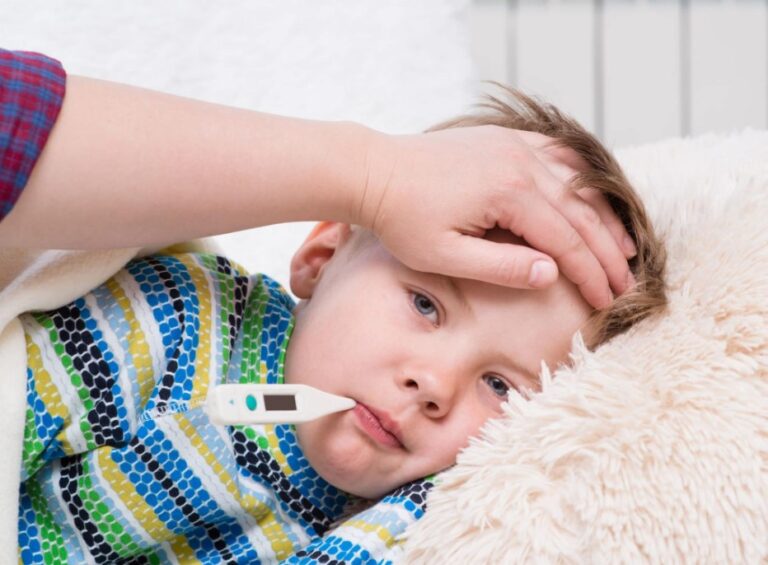
This initial phase resembles a severe upper respiratory infection.
Phase 2: Exanthem (Rash) Stage – HIGHLY CONTAGIOUS
Onset: Rash appears 3-5 days after fever begins.
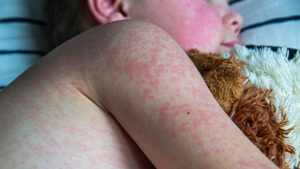
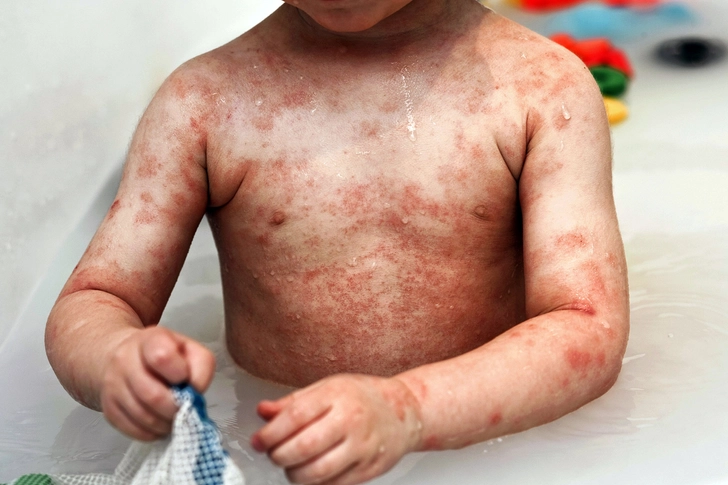
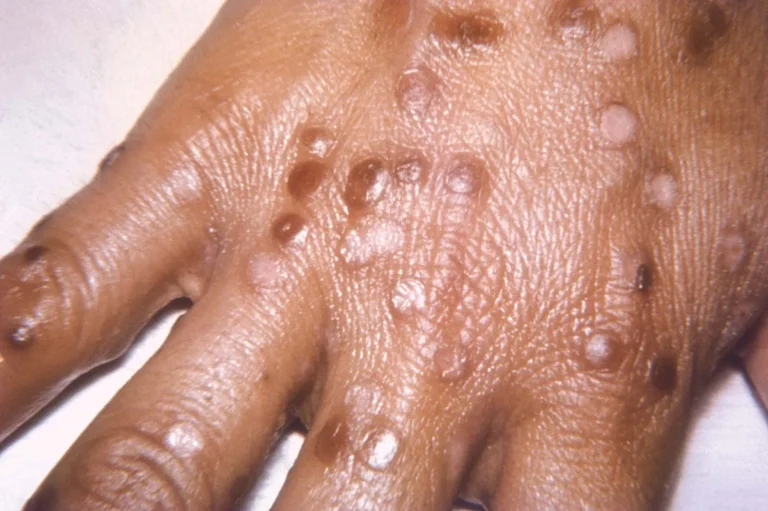
Progression: A maculopapular (flat red areas with small bumps) rash that starts at the hairline and behind the ears. Over 24-48 hours, it spreads downward to the face, neck, trunk, arms, and legs, eventually reaching the feet.
Character: The rash may become confluent (join together) as it spreads. It is typically non-itchy. As it fades (after 5-6 days), it may leave behind a brownish discoloration and fine desquamation (peeling).
Systemic Symptoms: Fever peaks with the rash and then begins to subside. The “Three C’s” symptoms persist. The patient appears profoundly ill.
Contagious Period: An infected person is contagious from 4 days before the rash appears until 4 days after it appears.
Part 3: Complications – The True Danger of Measles
Complications are common, especially in children under 5 and adults over 20. Approximately 1 in 5 unvaccinated people with measles will be hospitalized.
Common Complications:
Diarrhea (can lead to severe dehydration).
Otitis Media (ear infections), which can lead to permanent hearing loss.
Pneumonia: The most common cause of measles-related death in young children. Can be viral (from measles virus itself) or bacterial (secondary infection).
Laryngotracheobronchitis (Croup).
Severe, Life-Threatening Complications:
Acute Encephalitis: Occurs in about 1 in 1,000 cases. Inflammation of the brain leading to vomiting, seizures, coma, and permanent brain damage (intellectual disability, paralysis) or death.
Subacute Sclerosing Panencephalitis (SSPE): A rare, invariably fatal degenerative neurological disorder caused by a persistent measles virus infection in the brain.
Onset: Develops 7-10 years after initial measles infection, often in children who contracted measles before age 2.
Progression: Gradual behavioral and intellectual deterioration, followed by seizures, motor decline, coma, and death. There is no cure.
Special Risk Groups:
Pregnant Women: Risk of miscarriage, preterm birth, low birth weight.
Immunocompromised Individuals: At risk for severe, progressive, and often fatal disease without the typical rash (“modified measles”).
Part 4: Diagnosis and Treatment – Supportive Care is Key
Diagnosis:
Clinical Diagnosis: The combination of high fever, the “Three C’s,” Koplik spots, and the characteristic rash progression is often sufficient in an outbreak setting.
Laboratory Confirmation: Crucial for public health surveillance.
Serology: Detection of measles-specific IgM antibodies in serum.
RT-PCR: Detection of measles virus RNA from a throat swab, nasopharyngeal swab, or urine sample. This is the most sensitive method.
Treatment:
There is no specific antiviral treatment for measles. Management is entirely supportive.
Fever and Discomfort: Acetaminophen or ibuprofen. NEVER give aspirin to a child with a viral illness due to the risk of Reye’s syndrome.
Hydration: Encourage plenty of fluids to prevent dehydration from fever and diarrhea. Oral rehydration solutions may be necessary.
Nutrition: Maintain caloric intake with a nutritious diet.
Vitamin A Supplementation: The World Health Organization (WHO) recommends high-dose vitamin A for all children with measles, especially in areas with known deficiency. It reduces the risk of complications (eye damage, severe pneumonia) and mortality.
Antibiotics: Only if a secondary bacterial infection (like pneumonia or otitis media) is diagnosed.
Hospitalization: Required for severe cases (encephalitis, severe pneumonia, dehydration).
Part 5: Prevention – The Power and Imperative of Vaccination
Vaccination is the only safe and effective way to prevent measles. It is a public health imperative.
The MMR Vaccine:
Composition: A live-attenuated virus vaccine that protects against Measles, Mumps, and Rubella. A combined MMRV vaccine (adding Varicella/chickenpox) is also available.
Efficacy: One dose is about 93% effective. Two doses are about 97% effective at preventing measles. Protection is long-lasting, likely lifelong for most people.
Recommended Schedule (CDC):
Catch-Up and Adults: Unvaccinated adults born after 1957 should get at least one dose of MMR. College students, healthcare workers, and international travelers should have documentation of two doses or immunity.
Herd Immunity & Community Protection:
To prevent outbreaks, at least 95% of a population must be vaccinated. This protects those who cannot be vaccinated: infants under 12 months, pregnant women, and the immunocompromised.
Post-Exposure Prophylaxis:
For unvaccinated individuals exposed to measles, options can prevent or modify the disease if given promptly:
MMR Vaccine: Given within 72 hours of exposure.
Immune Globulin (IG): Given within 6 days of exposure. Recommended for infants, pregnant women, and severely immunocompromised individuals.
Conclusion: A Preventable Tragedy
Measles is a stark testament to the power of vaccination and the consequences of its neglect. The virus is not a relic; it is a relentless opportunist that exploits gaps in immunity. Its clinical presentation is dramatic and its potential for harm is real, extending far beyond the acute illness to lifelong neurological devastation. In an era of global travel and vaccine hesitancy, maintaining high vaccination coverage is not a matter of individual choice but a collective responsibility. The signs, symptoms, and potentially tragic outcomes of measles are entirely preventable. The most effective “treatment” is, and always will be, the timely administration of the safe, effective, and life-saving MMR vaccine.
Key Takeaways:
Measles is highly contagious and causes a severe, systemic illness.
Recognize the prodrome (high fever + 3 C’s) and the pathognomonic Koplik spots.
Complications are common and can be fatal. There is no specific antiviral treatment.
The MMR vaccine is safe, highly effective, and the only reliable protection.
Herd immunity (≥95% vaccination) is critical to protect the most vulnerable.
When to Seek Immediate Medical Attention:
Any child or adult with symptoms of measles, especially if unvaccinated and exposed.
Signs of complications: difficulty breathing, persistent high fever, confusion, seizures, severe headache.
Resources:
Disclaimer: This article is for informational purposes only and is not a substitute for professional medical advice. If you suspect you or your child has measles, contact your healthcare provider immediately for instructions (they may ask you to come in a special way to avoid exposing others) and follow public health guidance.