The Rainbow Revolution: How Quantity and Variety in Fruits and Vegetables Transform Your Health
Introduction: Beyond the “Five-a-Day” Mantra
For decades, public health campaigns have championed the simple message: “Eat your fruits and vegetables.” While the “five-a-day” guideline represented an important starting point, emerging nutritional science reveals a more nuanced and compelling truth. The real power lies not just in quantity, but in diverse quantity—consuming an abundant array of differently colored, textured, and phytochemically-rich plant foods. This comprehensive guide explores the profound, synergistic advantages of embracing both the amount and variety of fruits and vegetables in your diet.
Part 1: The Case for Quantity – Why More Matters
1. The Dose-Response Phenomenon: More is Literally Better
Extensive epidemiological research reveals a clear dose-response relationship between fruit and vegetable consumption and health outcomes. This means:
Reduced Mortality Risk: A meta-analysis in the International Journal of Epidemiology found that consuming 800 grams daily (about 10 portions) was associated with a 24% reduced risk of heart disease, 33% reduced risk of stroke, 28% reduced risk of cardiovascular disease, and 13% reduced risk of cancer compared to non-consumers.
The “10-a-Day” Advantage: While 5 servings showed benefit, each additional serving up to 10 continued to provide incremental protection. Each 200-gram increase in daily intake reduced cardiovascular risk by 13% and cancer risk by 4%.
2. Mechanisms Behind the Volume Advantage
Crowding Out Effect: High volumes of low-calorie-dense fruits and vegetables naturally displace processed foods, refined carbohydrates, and unhealthy fats, leading to better weight management and metabolic health.
Fiber Saturation: Abundant intake ensures optimal fiber levels (25-38g daily), which regulates digestion, stabilizes blood sugar, feeds beneficial gut bacteria, and promotes satiety.
Nutrient Insurance Policy: Large quantities provide built-in safety margins for essential vitamins and minerals, ensuring adequacy even when individual food nutrient density varies.
3. The Volume-Health Connection: Specific Benefits
Weight Management Mastery: Fruits and vegetables average just 50 calories per 100 grams compared to 400+ calories in many processed foods. Their high water and fiber content creates physical fullness with fewer calories.
Cardiovascular Fortification: Potassium-rich produce helps regulate blood pressure, while antioxidants protect blood vessels from oxidative damage.
Cancer Defense: The World Cancer Research Fund estimates that non-starchy vegetables and fruits probably protect against cancers of the mouth, pharynx, larynx, esophagus, stomach, and lung.
Part 2: The Spectrum Strategy – Why Variety is Crucial
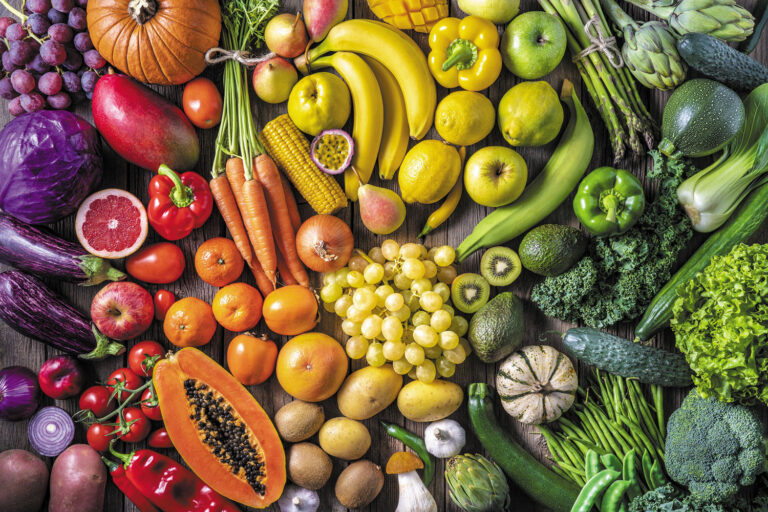
1. The Phytochemical Rainbow: Nature’s Medicine Cabinet
Different colors represent distinct families of protective compounds:
Red (Tomatoes, watermelon): Lycopene – prostate and heart health
Orange/Yellow (Carrots, squash): Beta-carotene – immune function and vision
Green (Spinach, broccoli): Lutein, zeaxanthin – eye and brain health
Blue/Purple (Blueberries, eggplant): Anthocyanins – cognitive function and anti-aging
White/Brown (Garlic, mushrooms): Allicin, selenium – immune and cardiovascular support
2. The Synergy Principle: 1+1=3
Phytochemicals work in concert, creating effects greater than their individual parts:
Vitamin C in citrus regenerates vitamin E from nuts and seeds
Sulforaphane from broccoli is more bioavailable when paired with selenium from Brazil nuts
Curcumin from turmeric is absorbed 2000% better when combined with piperine from black pepper
3. Gut Microbiome Diversity: Your Internal Ecosystem
Different plant fibers feed different bacterial strains. A 2018 mSystems study found people eating 30+ different plant types weekly had more diverse gut microbiomes than those eating 10 or fewer. This diversity is linked to:
Part 3: The Combined Power – Quantity × Variety = Transformation
1. Comprehensive Nutrient Coverage
The Recommended Dietary Allowances (RDAs) were established to prevent deficiency diseases, but optimal health requires broader nutrient insurance. Only by consuming abundant variety can you ensure adequate intake of:
All essential vitamins and minerals
Thousands of known phytochemicals
The yet-undiscovered compounds in plant foods
2. Built-in Dietary Resilience
A diverse, abundant plant-based diet provides:
Seasonal Adaptation: Eating what’s in season ensures natural variety throughout the year
Supply Chain Protection: Not relying on one or two “superfoods” prevents nutritional gaps if certain items become unavailable
Palate Satisfaction: Variety prevents “food boredom” and supports long-term dietary adherence
3. The “Whole Matrix” Advantage
Whole fruits and vegetables provide nutrients within their natural fiber matrix, which:
Slows sugar absorption (compared to juices)
Enhances micronutrient bioavailability
Provides prebiotic fibers absent in supplements
Part 4: Practical Implementation – The 30-Plant Weekly Challenge
1. The Counting System
Each different fruit, vegetable, legume, nut, seed, herb, and spice counts as 1
Different colors of the same vegetable (red vs. green cabbage) count separately
Goal: 30 different plants weekly
2. Sample Diverse Week
Monday: Spinach, tomatoes, onions, garlic, chickpeas, lemon, olive oil, basil
Tuesday: Kale, sweet potatoes, black beans, avocado, lime, cilantro, pumpkin seeds
Wednesday: Broccoli, carrots, mushrooms, edamame, ginger, sesame seeds
Thursday: Arugula, beets, walnuts, oranges, parsley, flaxseed
Friday: Red cabbage, bell peppers, lentils, turmeric, almonds
Saturday: Swiss chard, asparagus, sunflower seeds, blueberries, rosemary
Sunday: Brussels sprouts, cauliflower, pecans, apples, cinnamon
Total: 35 different plants
3. Visual Guide: The Rainbow Plate Method
½ plate: Mixed vegetables (aim for 3+ colors)
¼ plate: Quality protein (often plant-based: legumes count toward plant total)
¼ plate: Whole grains or starchy vegetables
Garnish: Fresh herbs, seeds, or citrus
Dessert: Seasonal fruit
Part 5: Overcoming Common Barriers
1. Cost Concerns
Prioritize frozen: Equally nutritious, often more affordable
Buy in season: Seasonal produce is cheaper and more flavorful
Reduce waste: Use stems, leaves, and scraps in stocks and sauces
Grow herbs: Windowsill gardens provide cheap variety
2. Time Constraints
Batch roasting: Prepare multiple vegetables at once
Salad jar system: Layer ingredients for quick assembly
Smoothie packs: Pre-portion frozen fruit/vegetable combinations
Double recipes: Cook once, eat twice with varied accompaniments
3. Limited Access
Community Supported Agriculture (CSA): Regular boxes of seasonal variety
Farmers markets: Often more diverse than supermarkets
Canned and frozen: Count toward plant diversity goals
Microgreens: Grow nutrient-dense variety in small spaces
The Evidence Base: What Research Shows
Landmark Studies:
The EPIC Study (European Prospective Investigation into Cancer and Nutrition): Following 520,000 people across 10 countries, found each 200g increase in fruit/vegetable intake reduced cardiovascular mortality by 13%.
The Gut Microbiome Study (American Gut Project): Analyzed over 10,000 stool samples worldwide, finding plant diversity was the strongest predictor of microbial diversity.
The Nurses’ Health Study and Health Professionals Follow-Up Study: Combined data from over 100,000 participants showing those in the highest quintile of fruit/vegetable variety had 30% lower cardiovascular risk.
Special Populations and Considerations
For Children:
Early exposure to variety predicts lifelong diverse eating
“Tasting plates” with small portions of many colors increase acceptance
Involve children in selection and preparation
For Older Adults:
Variety combats “taste bud fatigue” common with aging
Different textures address changing dental needs
Phytochemicals protect against age-related cognitive decline
For Athletes:
Different antioxidants protect against exercise-induced oxidative stress
Variety ensures complete micronutrient coverage for recovery
Natural nitrates in leafy greens enhance performance
Beyond Nutrition: The Broader Impacts
Environmental Advantages:
Biodiversity Support: Demand for variety encourages cultivation of heirloom and lesser-known species
Soil Health: Crop rotation and polyculture systems maintain soil integrity
Reduced Food Miles: Seasonal, local variety decreases transportation emissions
Social and Cultural Benefits:
Culinary Exploration: Variety invites global culinary adventures
Food Heritage Preservation: Supports traditional crops and preparation methods
Community Connection: Farmers markets and CSAs build local networks
Conclusion: The Abundant Spectrum Strategy
The journey from “five-a-day” to “abundant variety” represents a paradigm shift in nutritional thinking. It moves us from viewing fruits and vegetables as obligatory side dishes to recognizing them as the colorful, diverse foundation of optimal health. This approach acknowledges nature’s wisdom—that no single plant contains all we need, but together, in sufficient quantity and dazzling variety, they provide an unparalleled symphony of protective compounds.
The advantages extend beyond the individual to our gut ecosystems, our communities, and our planet. By embracing both quantity and variety, we’re not just checking a nutritional box; we’re participating in a rainbow revolution that celebrates the abundance, diversity, and interconnectedness of our food system and our biology.
Start small: add one new vegetable to your cart this week, try a fruit you’ve never tasted, or add herbs to your existing meals. Each addition moves you toward the vibrant health that comes not from any single “superfood,” but from the spectacular, varied orchestra of plant foods working in concert within your body.