Brown Rice vs. White Rice: A Comprehensive Nutritional Showdown
Introduction: More Than Just Color
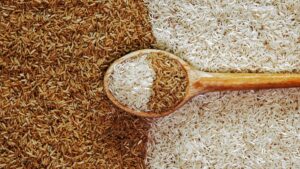
The debate between brown and white rice extends far beyond personal preference or culinary tradition—it represents a fundamental choice between a whole grain and a refined carbohydrate with significant implications for health, metabolism, and disease prevention. This detailed comparison examines every aspect of these dietary staples, from microscopic nutrient profiles to long-term health impacts.
The Processing Difference: Where the Division Begins
Anatomy of a Rice Kernel:
Hull/Husk: Inedible outer coating (removed from both)
Bran Layer: Fiber-rich, nutrient-dense outer layer (removed for white rice)
Germ: Nutrient-packed embryo containing oils, B vitamins, antioxidants (removed for white rice)
Endosperm: Starchy carbohydrate core (remains in both)
The Milling Process:
Brown rice: Only the inedible hull removed
White rice: Milling removes bran and germ, then often polished with glucose or talc
Result: White rice loses 67% of vitamin B3, 80% of vitamin B1, 90% of vitamin B6, 50% of manganese, 60% of iron, and all dietary fiber and essential fatty acids
Head-to-Head Nutritional Comparison (Per 1 Cup Cooked)
*DV = Daily Value based on 2,000 calorie diet*
The Fiber Factor: Why It Matters Most
Brown Rice Fiber Profile:
Insoluble fiber (80%): Prevents constipation, supports gut health
Soluble fiber (20%): Lowers cholesterol, regulates blood sugar
Prebiotic effects: Feeds beneficial gut bacteria (Bifidobacterium, Lactobacillus)
Health Impacts of Fiber Disparity:
Digestive Health:
Brown rice: Prevents constipation, reduces diverticulitis risk by 40%
White rice: May exacerbate constipation
Satiety and Weight Management:
Brown rice: Increases fullness by 30%, reduces subsequent calorie intake
White rice: Rapid digestion leads to quicker return of hunger
Gut Microbiome:
Blood Sugar Response: The Glycemic Divide
Mechanisms Behind the Difference:
Physical Barrier Theory: Bran layer physically impedes enzymatic starch access
Fiber Matrix Effect: Fiber creates gel-like matrix slowing carbohydrate digestion
Phytic Acid Presence: Mildly inhibits digestive enzymes
Clinical Evidence:
Harvard Nurses’ Health Study: 2+ servings brown rice weekly reduces diabetes risk by 11%
Replacement Study: Substituting 50g white rice with brown rice daily reduces diabetes risk by 16%
Acute Studies: Brown rice produces 24% lower post-meal glucose and 57% lower insulin response
The Arsenic Consideration:
Vitamin and Mineral Showdown
The Enrichment Paradox:
White rice enrichment (U.S.): Adds back thiamin, niacin, folate, iron
What’s NOT replaced: Magnesium, potassium, zinc, selenium, B6, fiber, antioxidants
Bioavailability issue: Synthetic iron added to white rice poorly absorbed compared to natural forms in brown rice
Key Nutrient Advantages of Brown Rice:
Magnesium:
Role: Involved in 300+ enzymatic reactions, blood pressure regulation, glucose metabolism
Deficiency link: Associated with insulin resistance, hypertension, migraines
Brown rice advantage: 4x higher than white rice
Manganese:
Role: Bone formation, collagen production, antioxidant defense
Brown rice advantage: Nearly 3x higher than white rice
Phytochemicals Present Only in Brown Rice:
Gamma-oryzanol: Lowers cholesterol, reduces menopausal symptoms
Ferulic acid: Potent antioxidant with anti-inflammatory properties
Phytic acid: Controversial—may reduce mineral absorption but has anti-cancer properties
Health Outcome Comparisons
Diabetes Risk:
Brown rice: Associated with 11-16% lower risk of Type 2 diabetes
White rice: Each daily serving increases diabetes risk by 11% (Asian populations)
Mechanism: Lower glycemic response preserves pancreatic beta-cell function
Weight Management:
Brown rice consumers: Lower BMI by average 0.6 points
Harvard Study: Women eating brown rice gain 1.5 lbs less over 12 years than white rice eaters
Satiety Index: Brown rice scores 68% higher on satiety scales
Cardiovascular Health:
Brown rice: Reduces LDL cholesterol by 7-15% in clinical trials
Framingham Offspring Study: Whole grain intake reduces heart disease risk by 20-30%
Blood pressure: Magnesium and potassium in brown rice support healthy BP
Digestive Health:
Brown rice: Increases stool weight by 33%, reduces transit time
Diverticular disease: 40% lower risk with high whole grain intake
Colon cancer: 20-30% reduced risk with regular whole grain consumption
Culinary and Practical Considerations
Taste and Texture:
Brown rice: Nutty flavor, chewier texture, longer cooking time (35-45 minutes)
White rice: Neutral flavor, softer texture, faster cooking (15-20 minutes)
Soaking solution: Soak brown rice 30 minutes to reduce cooking time
Shelf Life and Storage:
Brown rice: 6 months (refrigerate) – germ oils can become rancid
White rice: 2+ years – stable due to oil removal
Cooking yield: Brown rice absorbs more water (1 cup dry = 3 cups cooked vs. 2.5 for white)
Cost Comparison:
Cultural Context:
Historical preference for white rice: Status symbol (removing bran required labor)
Modern shift: Increasing brown rice consumption in traditional white rice cultures
Compromise: Mix brown and white rice during transition
Special Populations and Considerations
For Athletes:
Pre-workout: White rice provides faster energy (higher GI)
Daily training diet: Brown rice better for overall nutrient needs
Recovery: Brown rice provides magnesium for muscle function
For Children:
Arsenic concern: Limit brown rice, alternate with other grains
Texture preference: Many children prefer white rice
Nutritional needs: Brown rice valuable for growing bodies if arsenic-safe
For Those with Digestive Issues:
IBS/IBD flares: White rice may be better tolerated (low-fiber, binding)
Chronic constipation: Brown rice clearly superior
Diverticulosis: Brown rice recommended (contrary to old medical advice)
For Budget-Conscious Families:
Strategies: Buy in bulk, use as base for bean/grain mixtures
Nutrient optimization: Combine brown rice with lentils for complete protein
The Middle Ground: Alternative Options
Parboiled/Converted Rice:
Process: Steam-pressure treatment drives nutrients into endosperm before milling
Advantage: Retains 80% of original nutrients with white rice texture
Glycemic index: 38-47 (lower than brown rice in some cases)
Germinated/Sprouted Brown Rice:
Process: Soaking activates enzymes, increases nutrient availability
Benefits: Higher GABA (neurotransmitter), softer texture, reduced phytic acid
Research: Shows improved cholesterol and blood pressure benefits
Pigmented Rice Varieties:
Black/Purple/Red rice: Contains anthocyanins (same antioxidants as blueberries)
Nutrition: Higher protein, fiber, and antioxidants than brown rice
Drawback: Longer cooking, stronger flavor, higher cost
Environmental and Sustainability Considerations
Resource Use:
Water footprint: Similar for both types
Yield: Brown rice slightly lower (less processing loss)
Nutritional yield: Brown rice provides 3x more nutrients per acre
Food Security Perspective:
Historical: White rice prevented beriberi epidemics in Asia (before enrichment)
Modern: Brown rice offers more complete nutrition without fortification
Storage: White rice stores better in tropical climates
Practical Recommendations
For Optimal Health:
Make brown rice your default for daily consumption
Mix grains: Combine brown rice with quinoa, barley, or farro
Soak before cooking: Reduces arsenic, phytic acid, and cooking time
Rinse thoroughly: Removes surface starch and contaminants
Cook in excess water: Draining reduces arsenic by 30-50%
When White Rice May Be Preferable:
During digestive illness (gastroenteritis, IBD flare)
For athletes needing rapid glycogen replenishment
In traditional dishes where texture is essential
When introducing grains to infants (with attention to arsenic)
For those with severe chewing difficulties or dysphagia
Transition Strategies:
Start with 50/50 mix of brown and white rice
Try different varieties: Short, medium, or long grain brown rice
Enhance flavor: Cook in broth, add herbs, toast before cooking
Use kitchen gadgets: Pressure cooker reduces brown rice cooking time to 20 minutes
The Verdict: A Clear Winner with Contextual Considerations
Brown rice emerges as the definitive nutritional champion with superior fiber, minerals, antioxidants, and health outcomes. The evidence overwhelmingly supports choosing brown rice for:
However, white rice retains value in specific contexts:
Digestive distress management
Rapid energy needs
Cultural culinary traditions
When combined strategically with other nutrient-dense foods
Final Recommendation:
Aim for 80-90% brown rice consumption with strategic use of white rice when appropriate. For maximum benefit, diversify beyond rice entirely—incorporate quinoa, farro, barley, and other whole grains to obtain a broader nutrient spectrum while minimizing potential arsenic exposure.
The rice bowl of the future should be predominantly brown, occasionally white, and frequently mixed with other nutrient-powerhouse grains and legumes—creating meals that nourish deeply while satisfying completely.