Down Syndrome in Children: A Comprehensive Guide to Understanding, Support, and Potential
Introduction: Redefining the Narrative
Down syndrome is not a disease, a tragedy, or a limitation to be feared. It is a genetic condition, a different blueprint for human development that creates a unique constellation of strengths, challenges, and possibilities. Occurring in approximately 1 in every 700 births globally, it is the most common chromosomal condition diagnosed in the United States. For families, a diagnosis of Down syndrome begins a journey that redefines expectations, celebrates small victories with profound joy, and underscores a fundamental truth: a child with Down syndrome is first and foremost a child—filled with personality, love, and the capacity to learn, grow, and contribute to the world.
This article provides a detailed, compassionate, and evidence-based exploration of Down syndrome in children, from genetics and health considerations to development, education, and family life.
Part 1: The Genetic Foundation – Understanding Trisomy 21
At its core, Down syndrome is caused by the presence of an extra copy of chromosome 21. This additional genetic material alters the course of development.
Trisomy 21 (Nondisjunction): Accounts for 95% of cases. An error in cell division results in an embryo with three copies of chromosome 21 in every cell. This error is random and not linked to parental behavior.
Translocation Down Syndrome: Accounts for ~4% of cases. An extra part or a whole chromosome 21 is present, but it is attached or “translocated” to another chromosome (often chromosome 14). This can be inherited from a parent who is a balanced carrier.
Mosaicism: Accounts for ~1% of cases. Some cells have the typical 46 chromosomes, while others have 47 with the extra chromosome 21. This mixture can result in a milder presentation of some characteristics.
Advanced Maternal Age is a known risk factor, as the chance of nondisjunction increases as a woman’s eggs age. However, because younger women have more babies, 80% of children with Down syndrome are born to mothers under 35.
Common Physical Characteristics
These features, which vary widely from individual to individual, are part of the phenotypic expression of the extra genetic material:
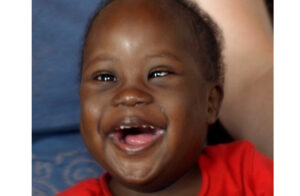
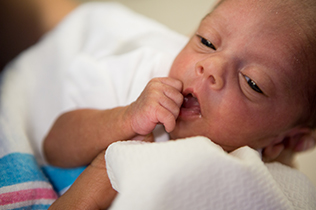
A flattened facial profile, particularly the bridge of the nose
Almond-shaped eyes with an upward slant
A single deep crease across the center of the palm (simian crease)
Hypotonia (low muscle tone)
A protruding tongue
Shorter stature and smaller hands/feet
Part 2: Health Profile and Medical Considerations
Children with Down syndrome have an increased risk for certain health conditions, making proactive and vigilant medical care essential. Many of these conditions are treatable, and life expectancy has dramatically increased to over 60 years today due to advances in medicine and social inclusion.
Common Associated Health Conditions Include:
Congenital Heart Defects: Present in about 50% of children. Conditions like Atrioventricular Septal Defect (AVSD) are common. Early screening via echocardiogram is critical, and many defects are surgically correctable.
Gastrointestinal Issues: Including duodenal atresia, Hirschsprung’s disease, and celiac disease. These often require surgical or dietary management.
Endocrine Disorders: Hypothyroidism is common and requires ongoing blood testing and possible hormone replacement.
Vision and Hearing Problems: Cataracts, strabismus (crossed eyes), refractive errors, and conductive hearing loss (due to smaller ear canals and fluid buildup) are frequent. Regular screenings by specialists are vital.
Sleep Apnea: Due to anatomical differences like a smaller midface and larger tongue, obstructive sleep apnea affects 50-75% of children. A sleep study is recommended.
Atlantoaxial Instability: A vulnerability in the neck vertebrae that requires screening via X-ray and may restrict high-impact activities.
Hematological Issues: A higher risk for transient myeloproliferative disorder in infancy and leukemia (both ALL and AML), though the absolute risk remains low.
The Down Syndrome Growth Charts, specific to the condition, are used by pediatricians to monitor growth appropriately.
Part 3: Developmental Profile and Cognition
Development follows the same sequence as in typically developing children but often at a slower pace. Intellectual disability ranges from mild to moderate; it is not profound. The cognitive profile is often uneven.
Strengths: Strong visual learning, social-emotional intelligence, mimicry, and often a good sense of humor. Many children excel in social interaction and can learn to read sight words effectively.
Challenges: Expressive language and speech are often more delayed than comprehension due to hypotonia affecting oral muscles. Working memory and auditory processing can be areas of relative difficulty.
Hypotonia (Low Muscle Tone): This foundational trait affects gross/fine motor skills (sitting, walking, writing) and speech. Early Intervention is crucial to build strength and neural pathways.
Part 4: The Intervention Framework – Building on Strengths
A proactive, multidisciplinary approach from birth maximizes potential.
Early Intervention (Birth to Age 3): Federally mandated services provided at home or in centers. A team typically includes:
Physical Therapists (PT): Address gross motor skills (rolling, crawling, walking).
Occupational Therapists (OT): Focus on fine motor skills (grasping, self-feeding) and sensory processing.
Speech-Language Pathologists (SLP): Work on feeding, oral motor strength, and communication, often introducing sign language or picture systems (AAC) to bridge the gap until speech develops.
Education (Age 3+): The Individuals with Disabilities Education Act (IDEA) guarantees a free, appropriate public education in the least restrictive environment.
Individualized Education Program (IEP): The legal document outlining specific goals, services (therapy), accommodations, and the educational setting. The goal is inclusion—learning alongside typically developing peers to the greatest extent appropriate, with necessary supports.
Therapies Across the Lifespan: Beyond school-based services, private therapies may target specific skills like speech clarity, social-pragmatic language, or motor planning.
Part 5: The Family and Social Ecosystem
A diagnosis of Down syndrome affects the whole family. Support systems are paramount.
For Parents: The initial period can involve grief, fear, and information overload. Connecting with other families through organizations like the National Down Syndrome Society (NDSS) or Global Down Syndrome Foundation is transformative. Sibling support is also important.
Promoting Independence: From self-care skills (dressing, toileting) to chores and eventual vocational training, fostering autonomy is a key parental goal. The mantra “presume competence” guides this journey.
The Evolving Social Landscape: Gone are the days of institutionalization. Today, children with Down syndrome are welcomed members of their families, schools, and communities. They participate in sports (Special Olympics), arts, and typical childhood activities. This inclusion benefits everyone, fostering empathy and reshaping societal perceptions.
Conclusion: A Life of Value and Contribution
Down syndrome is a lifelong condition, but it does not define the person. Each child with Down syndrome is an individual with a unique personality, talents, and dreams. They experience joy, frustration, friendship, and love with remarkable depth. The journey has challenges—medical, educational, and social—but it is also filled with unexpected rewards: a slowed-down pace that highlights simple joys, a community of profound support, and the daily lesson that human worth is not measured by IQ or productivity.
The future for individuals with Down syndrome is brighter than ever before. With early support, inclusive education, and a society learning to value neurodiversity, they are growing up to live fulfilling lives—attending college, working in integrated jobs, living semi-independently, and advocating for themselves. They are not just living in the world; they are enriching it, reminding us all of the core values of patience, kindness, and unconditional love.