Trachoma
Trachoma is a preventable blinding eye disease caused by the bacterium Chlamydia trachomatis. It remains a significant public health problem in many parts of the world, particularly in impoverished and overcrowded communities with poor sanitation. Here’s a detailed overview of trachoma:
Understanding Trachoma:
- Causative Agent:
- Chlamydia trachomatis (serovars A, B, and C).
- Transmission:
- Spread through direct or indirect transfer of eye and nose discharges.
- Common transmission routes include:
- Person-to-person contact (especially among children).
- Contaminated hands, clothing, and bedding.
- Eye-seeking flies.
- Person-to-person contact (especially among children).
- Spread through direct or indirect transfer of eye and nose discharges.
- Risk Factors:
- Poor hygiene and sanitation.
- Overcrowded living conditions.
- Lack of access to clean water.
- Areas with high fly populations.
- Poor hygiene and sanitation.
Symptoms and Progression:
Trachoma progresses through several stages:
- Trachomatous Follicular (TF):
- Characterized by the presence of follicles (small bumps) on the conjunctiva (the lining of the eyelid).
- Characterized by the presence of follicles (small bumps) on the conjunctiva (the lining of the eyelid).
- Trachomatous Intense (TI):
- Increased inflammation and thickening of the conjunctiva.
- Increased inflammation and thickening of the conjunctiva.
- Trachomatous Scarring (TS):
- Repeated infections lead to scarring of the conjunctiva.
- Repeated infections lead to scarring of the conjunctiva.
- Trachomatous Trichiasis (TT):
- Scarring causes the eyelid to turn inward, and the eyelashes to rub against the cornea (the clear front surface of the eye).
- Scarring causes the eyelid to turn inward, and the eyelashes to rub against the cornea (the clear front surface of the eye).
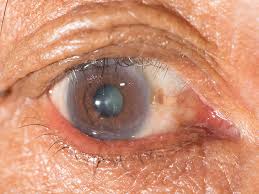
- Corneal Opacity (CO):
- Continued rubbing of the eyelashes on the cornea causes corneal scarring and opacity, leading to visual impairment and blindness.
Diagnosis:
- Clinical Examination:
- Diagnosis is primarily based on the characteristic appearance of the eye during examination.
- Laboratory Tests:
- In some cases, laboratory tests may be used to confirm the presence of Chlamydia trachomatis.
- In some cases, laboratory tests may be used to confirm the presence of Chlamydia trachomatis.
Treatment:
The World Health Organization (WHO) recommends the “SAFE” strategy for trachoma control:
- Surgery (S):
- Corrective surgery for trichiasis to prevent corneal damage.
- Corrective surgery for trichiasis to prevent corneal damage.
- Antibiotics (A):
- Mass administration of antibiotics (azithromycin) to treat active infection.
- Mass administration of antibiotics (azithromycin) to treat active infection.
- Facial Cleanliness (F):
- Promoting regular face washing, especially in children, to reduce transmission.
- Promoting regular face washing, especially in children, to reduce transmission.
- Environmental Improvement (E):
- Improving access to clean water and sanitation to reduce fly populations and transmission.
- Improving access to clean water and sanitation to reduce fly populations and transmission.
Prevention:
- Improved Hygiene:
- Regular handwashing and face washing.
- Regular handwashing and face washing.
- Environmental Sanitation:
- Access to clean water and proper sanitation facilities.
- Fly control measures.
- Access to clean water and proper sanitation facilities.
- Health Education:
- Raising awareness about trachoma and its transmission.
Public Health Importance:
- Trachoma is a leading cause of preventable blindness worldwide.
- It disproportionately affects poor and marginalized communities.
- The WHO’s SAFE strategy has led to significant progress in trachoma elimination.
It’s important to recognize that trachoma is a preventable disease. Global efforts are underway to eliminate trachoma as a public health problem.
I hope this information is helpful.